Friday, February 10, 2017

Home runs in Tee Ball / Coach pitch

Baseball Dads... 5-10 year olds Tee Ball / Coach Pitch / Kid Pitch... Help your lil slugger develop a technically sound short, accurate stroke and have fun doing it! 

Email: wristhitting@gmail.com for your FREE copy and drills you can do today!

Derived from the teachings and instruction passed down personally from ”The Kid", 
"The Splendid Splinter", "Teddy Ballgame", "The Thumper", "The Greatest Hitter Who Ever Lived", Mr. Ted Williams!

Wednesday, October 26, 2016

LITTLE LEAGUE® GRADS COMPETING IN THE 2016 MLB POSTSEASON

(L-R) Jonathan Schoop (2004), Michael Conforto (2004), Devon Travis (2003), and Jurickson Profar (2004)
Nearly every child who has stepped onto a Little League® field has dreamed of one-day playing Major League Baseball. For countless Little League grads, that dream has come true – from Allen “Sonny” Yearick, who played on one of the very first Little League teams in 1939 and went on to play professionally in the Boston Braves organization, to last year’s National League Rookie of the Year, Kris Bryant, who is on his way to his second-straight MLB postseason.
From Hall of Famers to Home Run Derby champions, Little League grads have had great success in the Major Leagues and many have even had the chance to play in the Little League Baseball World Series growing up.
With the MLB Postseason now upon us, it’s time to take a look at the confirmed Little League graduates who will be taking the field in the playoffs this October.NOTE: If you know of a player that we have missed, please e-mail the information, including name, current Major League team and the name of the city or town where they played Little League, to media@LittleLeague.org.

Baltimore Orioles

Pedro Alvarez
Michael Baum
Jonathan Schoop (Pabao LL; Willemstad, Curacao. Played in the 2004 Little League Baseball World Series)
Matt Wieters

Boston Red Sox

Xander Bogaerts (Aruba South LL; Savaneta, Fla. Played in the 2009 Senior League Baseball World Series)
Dustin Pedroia (Woodland LL; Woodland, Calif.)
Special Assistant to the GM, Jason Varitek (Almonte Springs National LL; Almonte Springs, Fla. Played in the 1984 Little League Baseball World Series)

Chicago Cubs

Jake Arrieta (Plano Baseball Association; Plano, Texas)
Kris Bryant (Peccole LL; Las Vegas, Nev.)
Manager, Joe Maddon (West Hazleton LL; Hazleton, Pa.)
Anthony Rizzo (Parkland LL; Parkland, Fla.)

Cleveland Indians

Rajai Davis (Willimantic LL; Willimantic, Conn.)
Giovanny Urshela
Guillermo Quiroz (Coquivacoa LL; Maracaibo, Venezuela. Played in the 1994 Little League Baseball World Series)

Los Angeles Dodgers

Austin Barnes (Magnolia Center LL; Riverside, Calif.)
Andre Ethier (Clarendon LL; Phoenix, Ariz.)
Adrian Gonzalez (Otay LL; Tijuana, Mexico and San Ysidro LL; Bonita, Calif.)
Kenley Jansen (Pabao LL; Willemstead, Curacao. Played in the 2003 Senior League Baseball World Series)
Howie Kendrick (Callahan LL; Callahan, Fla.)
Assistant to President and CEO, Vance Lovelace (Belmont Heights LL; Tampa, Fla. Played in the 1975 Little League Baseball World Series)
Former MLB player and one of the current LAD color commentator, Rick Monday
Joc Pederson (Palo Alto LL; Palo Alto, Calif.)
Chase Utley

New York Mets

Jay Bruce
Gavin Cecchini (South Lake Charles LL; Lake Charles, La. Played in the 2006 Little League Baseball World Series)
Manager, Terry Collins (Fraternal Northwest LL; Midland, Mich.)
Michael Conforto (Redmond North LL; Redmond, Wash. Played in the 2004 Little League Baseball World Series) Curtis Granderson
Matt Harvey (Mystic LL; Mystic, Conn.)
David Wright (Green Run LL; Chesapeake, Va.)

San Francisco Giants

Brandon Crawford (Pleasanton LL; Pleasanton, Calif.) Chris Heston
Angel Pagan
Ramiro Pena
Ruben Tejada (Activo 20-30 LL; Santiago, Panama. Played in the 2001 Little League Baseball World Series; 2005 Senior League Baseball World Series)

Texas Rangers

Carlos Beltran (Jose Maria Rodriguez LL; Manati, Puerto Rico)
Prince Fielder (Grosse Pointe Woods Shores LL; Grosse Pointe, Mich.)
Rougned Odor (Luz Maracaibo LL; Maracaibo, Venezuela)
Jurickson Profar (Pabao LL; Willemstead, Curacao. Played in the 2004 Little League Baseball World Series)

Toronto Blue Jays

Edwin Encarnacion
Jeff Francis (Little Mountain LL; Vancouver, Canada)
Aaron Sanchez (West Barstow LL)
Michael Saunders (Gordon Head LL; Victoria, British Columbia. Played in the 1999 Little League Baseball World Series)
Justin Smoak
Devon Travis (East Boyton Beach LL; Boyton Beach, Fla. Played in the 2003 Little League Baseball World Series)
Troy Tulowitzki (Sunnyvale LL; Santa Clara, Calif. Played in 1997 Little League Baseball West Regional Tournament)

Washington Nationals

Mark Melancon
Yusmiero Petit (Coquivacoa LL; Maracaibo, Venezuela. Played in the 1994 Little League Baseball World Series)
Jhonatan Solano
Ryan Zimmerman (Virginia Beach LL; Washington, N.C.)
Credit: http://www.littleleague.org/media/llnewsarchive/2016/September-December/Little-League-Grads-Competing-in-the-2016-MLB-Postseason.htm?utm_source=Little%20Leaguer%20October&utm_campaign=Little%20Leaguer%20October&utm_medium=MLB%20grads%20story

Thursday, May 19, 2016

Fielding Drills


The following fielding drills are demonstrated:

Fielding Drills


Infield Drills
  • 4 Corners
  • Basic Fielding
  • Circling
  • Paddle Drill
  • Partner Fielding
Outfield  Drills
  • 500
  • Batted Fly Balls
  • Coach Toss Outfield Drill
  • Football Drill
  • Outfield Ground Balls
  • Over Shoulder


4 Corners
  • With a group of 4, make a square.
  • Work on fielding ground balls between the 4 players.
  • Go clockwise, counter clockwise, and diagonally.
          View video


Basic Fielding
  • Ready.  Creep step.  Approach. 
  • Right-left-down. 
  • Throwing hand on top. 
  • Shovel hands with ball back and up. 
  • Right-left-throw (align shoulders, set feet). 
  • If lateral movement required then pivot/crossover.
          View video


Circling
  • Shortstops circle balls hit to the right side and in.
          View video


Paddle Drill
  • Ready.  Creep step.  Approach. 
  • Right-left-down. 
  • Throwing hand on top. 
  • When ball hits hand, shovel hands back and up. 
  • Right-left-throw (align shoulders, set feet). 
  • If lateral movement required then pivot/crossover.
          View video

Partner Fielding
  • Partner up players.
  • Roll ball on ground between partners.
  • Work on good footwork and transferring ball from glove to throwing hand.
          View Video


500
  • Group players out in outfield,
  • Coach throws a fly ball towards group, calling out a point value, 100, 200, 300, 400, or 500.
  • Players catch ball and earns points.
  • When a player reaches 500 the game begins again.
          View video


Batted Fly Balls
  • Ready position.  Creep step. 
  • Get behind/underneath ball. 
  • “W” with thumbs. 
  • Set up, crow hop and throw.
          View video


Coach Toss
  • Coach underhand tosses the ball up in the air for player to catch.
          View video


Football Drill
  • Coach plays quarterback.
  • One player is receiver.
  • One is the safety.
  • Receiver runs route trying to get open, safety tries to defend receiver.
          View video

Outfield Ground Ball
  • Safe vs. speed pickup. 
  • Approach, field, for speed pickup slow down on approach.
  • Field ball to glove side, crow hop/throw
          View video

Over Shoulder
  • Player faces coach
  • Coach points in one direction, directing the player to run.
  • Coach throws a fly ball in front of player.
  • Player should get under ball, use two hands, be ready to throw ball into infield.
          View video
Courtesy of Eden Prairie Baseball Association 

Wednesday, May 18, 2016

The Different Worlds of Youth Baseball


The Montopolis Scrappers of the South Austin Little League lived up to their name in a recent game at Weber Field near Zilker Park, coming back from an early 4-0 deficit to claim a 10-4 victory over their rival, the South Austin Strikerz. But the telling moment came on the losing side when Strikerz’ coaches awarded a game ball to one of their players.

That sportsmanlike nod, usually reserved for a winning MVP, will come as no surprise to Little League buffs who for years have valued what they see as the organization’s traditional emphasis on community building and a more relaxed attitude toward competition.

Since 1950, young Austinites have played on generations of teams like the Scrappers and the Strikerz. The South Austin Little League, Texas’s oldest organization of its kind, boasts some 240 players, ages 3 to 12, who play on 20 teams, while promising a place to young persons who wants to play.

Yet in recent years South Austin organizers, like others around the country, have faced declining enrollment numbers. That’s due in part to the growing popularity of other sports, like basketball and football, and to the limited free time both parents and children today have at their disposal, according to Chris Downs, the director of constituent communications at Little League International in Williamsport, Pennsylvania.

But that’s only part of the story. Little League participants say the decline also stems from the development of so-called travel or select teams that typically hold tryouts to “select” players with talent and whose parents’ can pay the higher costs involved. In some cases, a month of select play costs the same as an entire season of recreational ball.

Unlike Little League, select teams typically aren’t part of an all-encompassing umbrella organization, but instead participate in tournaments that local organizers set up. And while both types of play center around baseball, the attitudes brought to the game can differ sharply.

In Little League, its organizers say, it’s more about enjoying the game and forming a community, not so much on winning. In select, or travel ball, as its sometimes called, kids play more games in a more intense atmosphere. And it can cost them dramatically more money.

According to Kent Kostka, treasurer of the South Austin Little League, parents’ financial resources do not determine whether a child plays in his organization.

“It’ll be a cold day in hell before someone can’t play baseball [in the league] because of money,” he said.

If the parents can’t afford the $275 fee for the 10 to 12-year-old bracket, for example, the league will reduce the price in exchange for parents’ volunteering to cover some of the cost.

Kostka, whose son, Dashiell, 12, plays on both a select and a traditional Little League team, has noticed stark differences in attitudes and goals.

“It’s not as much about winning, it’s more about having fun” in the South Austin league, he said. “Baseball is a game that teaches you to fail… and Little League is a good place to learn that.”

Kostka, a lawyer for the University of Texas System, said that on the team of 9- and 10-year-olds he coached, only three or four kids wanted to play past the age of 10. In select, most organizations have an explicit goal of preparing participants to play in high school, college or even professional ball.

During one game, Kostka witnessed a Little League player’s response at a critical moment: he was up to bat in the last inning of a tied game with the winning run on base. But, instead of reflecting the tension of the moment, the player started moving his bat back and forth while making light saber sounds, Kostka recalled.

“You’re not going to see that in select ball,” Kostka said with a chuckle.

Nonetheless, even some staunch advocates of Little League believe there is a place for select baseball, where players receive instruction from paid coaches instead of the parent volunteers in Little League.

Paul Purcell, South Austin league president, agrees that at a certain point it’s best for the more focused baseball kids to play select ball, where the coaching tends to be better and parent-child conflict less common.

“I coached, and I enjoyed coaching, and I’ll coach my younger kids again, but at a certain level… I think the dad shouldn’t be the coach for the kid’s and the parent’s sake,” Purcell said. “I’d argue with my kid every game and every practice.”

Even though Purcell is league president, his son Peyton, 12, plays only on a select team.

“The number one negative of select ball is obviously you’ve got to pay… more,” he said.

According to Purcell, instead of the $275 fee for the entire spring season for the South Austin league, a select team costs $200 to $300 per month of season play after a down payment of $150 to $300 to cover jerseys and other basics. In addition, sometimes parents send their children to private lessons that can cost $30 to $50 per hour, he said.

Also, select teams play in baseball tournaments instead of the typical round-robin style found in recreational leagues. That means instead of playing one game Tuesday or Saturday, teams play multiple games on Saturday, and then start elimination games on Sunday. The schedule obliges parents to devote entire weekends if they want to see their kids play, which Purcell said can be difficult for some.

Downs believes Little League is about more than creating great baseball players—it’s about youth interacting and socializing with others the same age and creating community leaders for the future.

“Little League… is a leadership training program,” Downs said. “You want to try and grow these children into good, young adults who can be responsible and accountable to themselves and their communities.”

Downs thinks that select ball’s reputation for providing exposure to collegiate and professional scouts is overrated because, in Little League, you can receive just as much exposure through events like the Little League World Series, which is televised on ESPN.

“These travel and select ball teams actually charge you sometimes thousands of dollars to participate on a team with the promise that you are going to be seen by a scout… with no guarantee of placement,” Downs said. “Where Little League provides that same… opportunity at no cost to the player and no cost to the family.”

http://reportingtexas.com/the-different-worlds-of-youth-baseball/

Wednesday, April 13, 2016

Fun Baseball Drills and Games


We try to describe every baseball drill on this website in a manner that will make the drill fun. However, first and foremost, all of them have a useful learning or practical purpose.

The same isn’t quite as true about the following two fun baseball drills. They are more slanted towards the fun side than the learning side.

Having said that, there is a time and place for relaxing in baseball.

How many times have you and your players had to sit around waiting on umpires before a game? The players get antsy and probably are going to get in trouble with you.

Won’t it be better to have a fun baseball drill for them to play?

Or maybe you have had to play a string of games over the last few days. You know the boys need to throw the baseball around a little, but you don’t want to have a hard practice. Pick one of these two fun baseball drills and let the boys practice and relax at the same time.

Also be sure to check out our page called “Fun Baseball Games”. It has two other great fun things to do in baseball.

Baseball Tip – The Game of Pepper
The game of Pepper is probably the oldest of fun baseball drills. There are film footages of players back in the 1920’s playing Pepper. Even today you will see lots of little league teams playing the game.

It is a simple game or drill to play. One player or coach, with bat in hand, stands in front of a group of five to seven players, who are in a line. The coach or player with the bat (batter) should probably be about fifteen feet away from the line of players. The players in the line should be about five feet spread apart.

 A Game of Pepper
One player in the line will have a baseball. He starts the drill by tossing the ball towards the person with the bat.

The batter then hits a ground ball or line drive to a random player in the line. Those players can have gloves or not, depending on how hard the baseball is going to be hit back.

The player catches the ball or fields the ground ball and tosses it back at the batter. Again, the batter hits a ground ball or line drive to a random player.

And the drill just keeps on going. Players in the line are removed when they miss a ground ball or line drive, or make a bad toss back to the batter.

The game continues until there is only one player left in the line.

Baseball Tip – 2 Ball Toss Game
This is a good pre-game drill. It gets the players concentrating on baseball and also helps with their hand eye coordination skills. Fun baseball drills like this can really help a team’s chemistry.

Teams that have fun together will communicate better in the field, and it is a lot more fun knowing your teammates are pulling for you.

You can play this game with five to nine players. The players get into a circle, only a few feet a part from each other. Each player, except the “starter”, has one baseball and no gloves or bats.

The “starter” has two baseballs, one in each hand. The “starter” starts the game by tossing one of his baseballs to another player. This player in turn must toss the baseball he originally has, before catching the baseball that was tossed at him.

Players are not allowed to switch the baseball from hand to hand. In other words, the hand they catch the baseball with is the hand they must toss the baseball with. And, players are not allowed to move their feet.

So the rules are:

1) You must toss the baseball you have before catching a baseball tossed to you.

2) You must toss the baseball you have with the same hand as you caught the baseball with.

3) You must make good tosses to the other players.

4) You must not move your feet. Any violations of the rules and you are out of the game. Last man standing wins.

Break the Ice

So go ahead and tell your players about these drills. Everyone needs a break in the action, and these two fun baseball drills will help loosen up your team.And again, here is the link to the other Fun Baseball Games.

Here is a listing of the drills under the Team Drills Section:

Team Drills:

Game like Practice
Team Workup Drill
Relay Throws
Team Throwing Drills
The Workup Defensive Drills
Fielder’s Communication Drill
Indoor Baseball Drills
Game of Pepper and Game of 2 Ball Toss
Game of Flip and Game of 500
The Doubles Game
Infield Drills:

Infield Instruction
Live Infield Action – My Favorite Infield Drill
Teach Fielding Groundballs the Right Way
Infield Throwing and Double Play Drills
The Hot Box Drill
Indoor Baseball Drills
Fielder’s Communication Drill
Relay Throws
The Workup Defensive Drills
Outfield Drills:

Outfield Instructions
Outfield Drop Step Drill
Game like Situations
Fielder’s Communication Drill
Relay Throws
The Workup Defensive Drills
Coaching Tips and Misc Drills

Coaching Baseball Tips
Coaching Youth Baseball - Should I
Coaching Little League Baseball
Base Running Drills
Baseball Coaching is Right For You
Baseball Coaching Tips - Intimidating Coach
Throwing with Accuracy and Power
Baseball For Kids
Youth Baseball Instruction - Playing Scared
Youth Baseball Coaching – What's Your First Priority?

http://www.helpful-baseball-drills.com/funbaseballdrills.html

Wednesday, March 9, 2016

When 2 Tee Batting Drills are Necessary


Batting Drills

When 2 Tee Batting Drills are Necessary

After a while, kids get bored hitting balls off a single batting tee. Additionally, players may get away with incorrect habits, when only hitting the stationary ball on one batting tee. To add some variety and challenge to batting tee practice, two tee-batting drills are good for helping gain the perfect baseball swing. The following two-tee batting drills do just that.

Quality Batting Tee Drills

For batters, who pop up or swing under a great number of balls, the “high, low tee drill” helps. This drill develops a compact swing and eliminates the long, uppercut swing. This drill works best on high pitches in the strike zone, which are common pitches that batters drop the barrel on, with popped up or missed balls the result. It is necessary to note that, in order to correct bad swing fundamentals, having players slightly exaggerate the opposite of their bad habits, helps correct players’ swings.

Batting Drills

Batting DrillLine one tee a foot behind the other with both in line towards the pitcher. Put a ball on each tee with the ball on the tee closest to the catcher a ball’s width lower than the front ball – both balls are out front of the hitter in the contact zone. Hitters should miss the rear ball but hit line drives on the front ball. At first, ground balls usually result with this drill, but overtime, players turn them into solid line drives.

Batting Tee Drills to Prevent Bad Strides and Swings

For players who step differently based on the pitched location, or who do not understand where to make contact on various pitch locations, the following drill is a good first step to correcting those. The “inside/outside tee drill”  develops contact points, understanding of contact points and the same strides.
Batting Drill

Set one tee on the outside corner about 4 inches in front of the lead leg and the other tee on the inside corner about two feet in front of hitter. After the stride, hitters hit the ball (inside or outside) called by the coach.  When players have no coach to call out, they alternate hitting one than the other, after taking the same stride before swinging. When done correctly, contact is on one ball, and balls are driven to the direction of the struck ball. With the incorrect swing, players will hot both balls. Helping batters understand that the stride is the same on every pitch, with contact points being different, is usually necessary for inexperienced players.

Batting Tee Drills to Help Swing Extension
Batting Drills
For batters, who pull their head, front shoulder or roll their wrists early on the swing the “two tee in line drill” develops correct swing extension, as well as keeping the front shoulder from pulling off the ball. Batting Drills

Set two tees in line with a ball at the same height on each tee and about a foot apart. The ball closest to the hitter is out front of them in the prime contact-hitting zone. The object is to hit line drives with both balls, which is possible if hitting the inside back of ball closest to the hitter and extending through the second ball, without rolling the wrists too early.


http://www.baseballcoachingtips.net/quality-2-tee-batting-drills/

Wednesday, November 18, 2015

The decline of play in preschoolers — and the rise in sensory issues


Here is a new post from pediatric occupational therapist Angela Hanscom, author of a number of popular posts on this blog, including “Why so many kids can’t sit still in school today,” as well as “The right — and surprisingly wrong — ways to get kids to sit still in class” and “How schools ruined recess.” Hanscom is the founder of TimberNook, a nature-based development program designed to foster creativity and independent play outdoors in New England.

By Angela Hanscom

I still recall the days of preschool for my oldest daughter. I remember wanting to desperately enrich her life in any way possible – to give her an edge before she even got to formal schooling. I put her in a preschool that was academic in nature – the focus on pre-reading, writing, and math skills. At home, I bought her special puzzles, set up organized play dates with children her age, read to her every night, signed her up for music lessons, put her in dance, and drove her to local museums. My friends and I even did “enrichment classes” with our kids to practice sorting, coloring, counting, numbers, letters, and yes….even to practice sitting! We thought this would help prepare them for kindergarten.

[Why so many kids can’t sit still in school today]

Like many other American parents, I had an obsession: academic success for my child. Only, I was going about it completely wrong. Yes, my daughter would later go on to test above average with her academic skills, but she was missing important life skills. Skills that should have been in place and nurtured during the preschool years. My wake-up call was when the preschool teacher came up to me and said, “Your daughter is doing well academically. In fact, I’d say she exceeds expectations in these areas. But she is having trouble with basic social skills like sharing and taking turns.” Not only that, but my daughter was also having trouble controlling her emotions, developed anxiety and sensory issues, and had trouble simply playing by herself!

Little did I know at the time, but my daughter was far from being the only one struggling with social and sensory issues at such a young age. This was becoming a growing epidemic. A few years ago, I interviewed a highly respected director of a progressive preschool. She had been teaching preschoolers for about 40 years and had seen major changes in the social and physical development of children in the past few generations.

“Kids are just different,” she started to say. When I asked her to clarify, she said, “They are more easily frustrated – often crying at the drop of a hat.” She had also observed that children were frequently falling out of their seats “at least three times a day,” less attentive, and running into each other and even the walls. “It is so strange. You never saw these issues in the past.”


She went on to complain that even though her school was considered highly progressive, they were still feeling the pressure to limit free play more than she would like in order to meet the growing demands for academic readiness that was expected before children entered kindergarten.

Research continues to point out that young children learn best through meaningful play experiences, yet many preschools are transitioning from play-based learning to becoming more academic in nature. A preschool teacher recently wrote to me: “I have preschoolers and even I feel pressure to push them at this young age. On top of that, teachers have so much pressure to document and justify what they do and why they do it, the relaxed playful environment is compromised. We continue to do the best we can for the kid’s sake, while trying to fit into the ever-growing restraints we must work within.”

As parents and teachers strive to provide increasingly organized learning experiences for children (as I had once done), the opportunities for free play – especially outdoors is becoming less of a priority. Ironically, it is through active free play outdoors where children start to build many of the foundational life skills they need in order to be successful for years to come.

In fact, it is before the age of 7 years — ages traditionally known as “pre-academic” — when children desperately need to have a multitude of whole-body sensory experiences on a daily basis in order to develop strong bodies and minds. This is best done outside where the senses are fully ignited and young bodies are challenged by the uneven and unpredictable, ever-changing terrain.

Preschool years are not only optimal for children to learn through play, but also a critical developmental period. If children are not given enough natural movement and play experiences, they start their academic careers with a disadvantage. They are more likely to be clumsy, have difficulty paying attention, trouble controlling their emotions, utilize poor problem-solving methods, and demonstrate difficulties with social interactions. We are consistently seeing sensory, motor, and cognitive issues pop up more and more  in later childhood, partly because of inadequate opportunities to move and play at an early age.

What is our natural instinct as adults when issues arise? To try and fix the problem that could have been prevented in the first place. When children reach elementary school, we practice special breathing techniques, coping skills, run social skill groups, and utilize special exercises in an attempt to “teach” children how to be still and to improve focus.


However, these skills shouldn’t have to be taught, but something that was developed at a young age in the most natural sense — through meaningful play experiences.

[How schools ruined recess]

If children were given ample opportunities to play outdoors every day with peers, there would be no need for specialized exercises or meditation techniques for the youngest of our society. They would simply develop these skills through play. That’s it. Something that doesn’t need to cost a lot of money or require much thought. Children just need the time, the space, and the permission to be kids.

Let the adult-directed learning experiences come later. Preschool children need to play!

Source: https://www.washingtonpost.com/news/answer-sheet/wp/2015/09/01/the-decline-of-play-in-preschoolers-and-the-rise-in-sensory-issues/?fb_ref=Default&fb_source=message

Tuesday, November 17, 2015

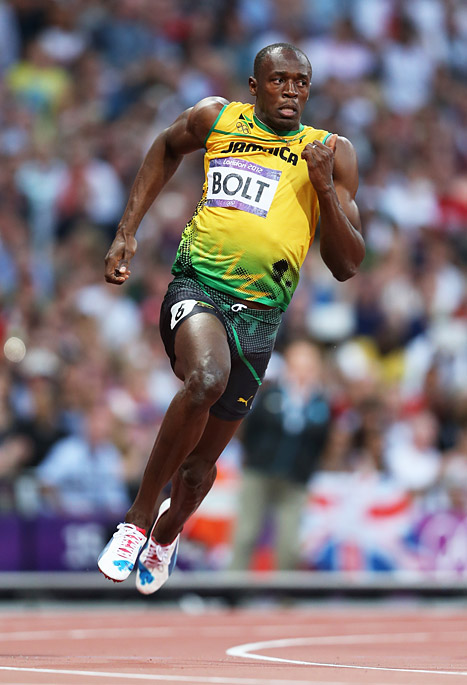
Bolt's gold down to yam power, father says

Usain Bolt streaked to 100 meters Olympic gold at the Beijing Olympics on Saturday thanks to yam power, his father said.

Wellesley Bolt said his son was partial to the vegetable grown in the north-western area of Jamaica where the sprinter was born.

"It is definitely the Trelawny yam," Bolt senior told Reuters seconds after his son smashed the world record on the way to landing the biggest gold medal in sport.

The yam grown in the parish Trelawny is one of the staples that has made the area famous. It is sold in huge volumes here and much of it is exported. Citizens of the area believe that it has medicinal properties.

"I was very nervous before the race, my heart was pumping. I spoke to him about two days ago and told him that I was getting nervous and he said 'don't worry Dad, I am going to win this one for you'," Wellesley told Reuters from his home, less than 30 minutes drive from the western tourist city of Montego Bay.

"My house has been taken over by more than 100 people from inside and outside the community.

"They are waving flags, beating drums and just making a lot of noise. But this is a special moment and to know that a Jamaican has done this and I am the father of that Jamaican makes me feel special.

"I never expected him to break the world record, but I am proud of my son."

Bolt senior said he sympathized with compatriot Asafa Powell who finished a disappointing fifth.

"That was surprising to me. I really feel it for Asafa because I felt that he should have performed better," he said.

Bolt's sister Sherine said she knew he would break the world record.

"I expected my brother to win the race and I told my daddy last night that he would do 9.68 seconds. He didn't quite do that, but I am happy still," Sherine said.

Source: http://www.reuters.com/article/2008/08/16/us-olympics-athletics-bolt-father-idUSPEK32492120080816#pszDtSSGwLLmRDbH.99

Not sure how to pick, peel, cook YAM?
Here you go!


Coaching Youth Speed Training


Much debate in the strength and conditioning world concerns how young athletes should begin a development program. However, experts agree that speed and agility drills can be part of any athlete's training, regardless of age. Youth speed training can easily be implemented in either an individual or group setting. Although form and function may be similar, the intensity level of children's exercises and drills should be appropriate for the degree of physical and psychological maturity of each individual athlete. (See Youth Sports Psychology: How to Ensure Your Athletes Stay Motivated and Have Fun.)

A qualified, experienced strength and conditioning professional should supervise these exercises and drills.

Youth Speed Training Drills

Introducing form, technique, and muscle memory drills early ensures the development of good habits. Focus on stride length, stride frequency, and footwork fundamentals with resisted running and speed ladders. These drills can be introduced when the athlete is of grade-school age, about six to eight years old. For weighted, resistance running, add loads not exceeding 10% of the athlete's body weight.

Arm Action Drills
Mountain Climbers
High Knees
Acceleration Drills (moving quickly from a still position; starting and stopping)
Resisted Running (parachute, weighted sled)
Uphill Running
Speed Ladders

Strength/Power Development
Lower-extremity strength and power are foundational components of speed development. Linear speed, agility and vertical jumping are based on the amount of force an athlete can generate against the ground. Since these exercises are higher-intensity/impact, volume should remain low for younger children. Athletes can safely begin performing them as pre-teens, about 10 to 12 years old.

Prisoner Squats
Power (high) Skipping
Power (long) Skipping
Lateral Skaters
Split Squat (alternating lunge) Jumps
Squat Jumps
Ankle Hops
Standing Long Jumps/Bounding

Keep It Simple
Youth speed drills should be easy to instruct, demonstrate, and perform. Don't stay on any one exercise or drill for too long. Keep it fresh to maintain engagement and involvement.

Make it Fun
Remember, they're just kids. Be generous with recognition and encouragement. Kids like competition, so make a game or contest of some of the drills, but keep it friendly.

Source: http://www.stack.com/2013/01/21/coaching-youth-speed-drills/

Tuesday, November 10, 2015

STAYING INSIDE THE BALL: WHAT DOES IT REALLY MEAN?

jeter1

Over the past 18 years, if you have ever watched a game on TV that Derek Jeter was playing in, chances are that you have heard the announcers praise his ability to stay inside the ball.   Walk into a training facility or baseball camp, and we’d be willing to bet that you’ll see a drill that is meant to practice the skill of staying inside the ball.

Staying inside the baseball is one the most common things taught by coaches across the land, yet, it is by far, one of the most misunderstood concepts in the game today.  More often than not, coaches explain how to stay inside the ball by telling players to hit the inside part of the ball, and/or to try to hit the ball to the opposite field, regardless of where the pitch is located.  Only on the outside pitch is this kind of instruction correct, while for anything located on the other two-thirds of the plate, a forced, unnatural, pushing-type of swing is inadvertently being developed, where the result on the field will likely be a lot of lazy fly balls the other way, to go along with quite a few hand-numbing jam shots.

So what does staying inside the baseball REALLY mean?

Truth be told, the skill of staying inside the ball actually has very little to do with the ball itself.  Think about this for a second… Unless the batter is getting hit by the pitch, his hands will ALWAYS be inside of the baseball.  The idea of staying inside the ball actually is in reference to where the hands are relative the hitter’s body, rather than where they are relative to the ball.  To easily understand what exactly that means, we offer a simple two-part demonstration:

PART ONE

Stand up, facing a partner, raise and extend your arms straight out in front, at shoulder height.   Palms up or down, in or out, it doesn’t matter.  With your arms out, challenge your partner to push them down, and use all of your strength to not allow him to do so.  Were you able to keep them out and at the same height without issue?  Probably not…

PART TWO

While still standing across from a partner starting with your arms down at your side, lift your hands to create an ‘L’ with your arms, bent at a 90-degree angle, keeping the elbows still alongside the body.  Form a fist with each hand, wrists facing one another.  Now again, challenge your partner to push your hands down, and again, use everything you’ve got to keep them up.  Any better this time around?  Did you feel a little stronger or a lot stronger with your hands in this position?  We know the answer…

Now that you have felt for yourself how much stronger you are with the hands closer to the body, we can now translate that to the baseball swing, and help you understand what staying inside the ball truly means:

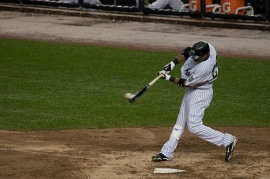
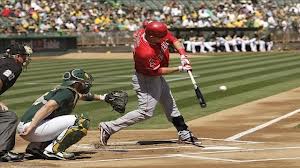
On contact, when the hitter’s arms are bent, hands closer to the body in that strong position, he is staying inside the baseball. Take a look below at four of the best hitters in the game today, and you’ll see four completely different swings, yet very similar looks on contact with regard to where their hands and arms are, in relation to their bodies.


Miguel Cabrera and David Ortiz:


Robinson Cano and Mike Trout:


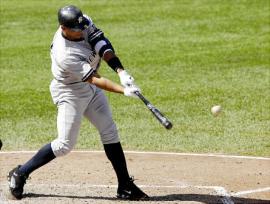
If on contact, the hitter’s arms are extended, hands further away from the body, then he is not staying inside the ball. The idea of extension of the arms through the ball happens AFTER contact. Below you will see a couple pretty accomplished Major Leaguers getting caught reaching out front, not in that strong hand/arm position as shown previously.

Alex Rodriguez and Bryce Harper:


The best place to start teaching how to properly stay inside the ball is on the tee. One of the greatest benefits of the tee is the fact that the ball can be placed just about anywhere, and we can make sure that we are making contact at the correct points (the further outside, the deeper- or closer to catcher- the ball should be hit), with a fundamentally sound swing that will force hitters to stay inside the ball correctly. From there, move on to front soft toss, where hopefully they will have the feel, from working on the tee, for where they should be making contact with the ball based on the location of the pitch, and eventually, allow all of those good habits created in practice to take over in BP and the game.

Source: https://coachingyourkidsblog.wordpress.com/2013/06/12/staying-inside-the-ball-what-does-it-really-mean/

Thursday, October 29, 2015

Redefining Success: 8 Tips for Being a Great Sports Parent


“When did parenting get to be so stressful?” began a recent post on the Changing the Game Project Facebook page. “I worry that if I don’t provide them with the best equipment, or get them on the best team, or take them to every camp or tournament, then I am letting my kids down. Why do I feel so much pressure? Can’t we just let kids be kids, have some free time and still raise a successful athlete?”

Have you ever felt this way? Tired of trying to keep up with the Joneses, stressed that your kids need to be in three places at once, and just hoping for a weekend off for a family meal?

If so, you are not alone. There is a lot of pressure on parents these days. We want the best for our children and we don’t think twice about taking action when we see we’re able to fill a need. But are we doing enough? Are we giving our kids the best chance of success?

It’s enough to drive you nuts.

But what if you could do more, simply by doing less?

Well, you can.

At Changing the Game Project we believe being a successful sports parent has nothing to do with who buys the more expensive equipment. Success is not who compiles the longer list of camps and clinics, whose kid makes the “A” team at the youngest age, or who posts the most pictures of kids with trophies on Facebook.

Our definition of success is taken from the master himself, Coach John Wooden, when describing his athletes and teams at UCLA:

“Success is the peace of mind which is a direct result of self-satisfaction in knowing you did your best to become the best you are capable of becoming.”

Shouldn’t we have a similar definition for parents?

“Successful parenting is the piece of mind in knowing that you did your absolute best to become the best parent you are capable of becoming.”

Not the best parent compared to so and so, but you, the best parent you can be with the talents and resources that you have.

Be the best parent that you are capable of becoming, with all you have going on in your life.
You don’t have to do everything under the sun for your kids to be a successful parent. You don’t have to give up every weekend and every vacation. It doesn’t mean you have to get a second mortgage to send your kids to six camps next summer.  And it certainly does not mean that what team your kid makes, or how many trophies he or she wins is a reflection upon whether you are a good parent or not.

It simply means doing your best, maintaining family balance, and watching your child succeed and fail without taking it personally.

It doesn’t mean paying for more; many times it actually means doing less.

Here are eight things you can do to increase your child’s chances of finding success and fulfillment in their sport that won’t cost you a penny. The best part, though, is they will help you fulfill your role as the parent of an athlete while at the same time making it all the more enjoyable.

8 Ways to Be a Great Sports Parent

1. Model Positive Behaviors.
Be a positive role model for your child. Sport should be an extension of your familial values and behaviors, not a suspension thereof. Be an encouraging parent. Don’t talk badly about competitors or loudly second-guess the coach. It’s okay to appreciate the athletic skill of a competitor and you are not a traitor for acknowledging another athlete has talent.
There are enough uninformed critics in the stands hurling insults at kids playing a game, so instead set the example for others. You are looked at just as much by other parents as your athlete is, so be the fan your child needs you to be.

2. See the future, but enjoy the present.
Are you consistently looking towards the next level, the next team, the next season? If you are, you’re missing out on the most important game, the one being played today! If you’re not enjoying the present moment, your child will grow up before you realize it; if you don’t squeeze every ounce of enjoyment out of their development as a person, you’ll regret it.
Be a parent who enjoys the now, and let the coach be the one who is looking to the “later.” Leave them alone on the ride home from games. Take your athlete to the court and let them teach you something. Throw the ball around the yard while you swap stories and get to know the social side of each other. Lots of smiles with no judgment during fun play will relieve stress for you and your athlete and also create special bonding moments that only an athlete and their parent can share.


3. Encourage risk taking and find joy in the effort.
Competing leads to winning and losing, thus competing is inherently risky. Don’t downplay the importance and challenge of risk taking by saying “Great job out there, maybe you’ll get it next time.” That’s vague encouragement and not helpful to an athlete’s development. Instead say “I love how you really went for it out there on that one play. You didn’t get it, but I was so proud that you didn’t give up!” Strong, specific words of encouragement remind an athlete it’s okay to take a risk and fail so long as she did all she could to be successful.

4. Celebrate the competitor above the winner.
The difference between losing and getting beat is in the effort expended during competition. A competitor never loses; they get beat, and getting beat fuels the competitor to improve. In every game, there is a winner and a loser. Defeat can be the seed of discontent your athlete needs to be motivated to work harder and smarter next time.

USA's Karch Kiraly celebrates a point during the men's beach volleyball finals of the Centennial Summer Olympic Games in Atlanta Sunday, July 28, 1996.  Kiraly and teammate Kent Steffes defeated fellow countrymen Mike Whitmarsh and Mike Dodd 24-13 for the gold.

Legendary volleyball player and three-time Gold Medalist Karch Kiraly spent his teen years playing beach volleyball against grown men. He didn’t win… at first. Winning was not the goal; development was.

In the beginning, Kiraly and his partner celebrated scoring 3 points in a match. Months later, they celebrated scoring 6 points in a match. A few years later, still a teenager, Kiraly wasn’t only competing against professionals but beating professionals and winning tournaments.
When your athlete plays a level above her ability and does well, that effort should be celebrated, regardless of the result. A true competitor should always look to “play up” a level, whether in practice or on game day. The expectation should be for her to compete at the highest level she can.

Excellence breeds success; a focus upon success rarely yields excellence.

5. Foster independence by allowing your athlete to take ownership.
Autonomy is one of the three key ingredients of long term athletic success. Goals and expectations are great tools if used properly. However, if your athlete is constantly trying to live up to your expectations it could lead to her believing your happiness depends on her performance.
Believe it or not, by taking a step back, you give your child the room to step forward and claim the sport for herself.

An elite athlete experiences enough pressure to perform well from his teammates, the coaching staff, and from himself. He doesn’t need the added pressure of an overzealous parent with good intentions!
Allowing and fostering independence is critical. There’s no escaping the mean, evil-spirited opinions, the rude comments, and the difficult situations that will confront an athlete. The sooner she learns to stand on her own and not always have you to lean on or hide behind, the better.

6. Treat the coach as an ally, not an adversary.
If you treat the coach as an adversary, how do you think your athlete will treat him? You and the coach want the same thing: for your athlete to be successful (though you might see different paths to making that happen). Once you know that the coach values your child not just as an athlete, but as a person, then step back and let him or her coach. You won’t always agree with every decision, and your child may struggle at times, but instead of saying “what’s wrong with this” try “what’s good about this?” There is always learning to be had if you look close enough.

Working with your coach by keeping him or her informed, and respecting boundaries, actually gives your child the best chance of success.

7. Encourage academics.
Eventually, all athletes have to one day turn in their jersey and find a new passion. Very few elite athletes play beyond college and an infinitesimal number make decent money playing professionally. An education is not a backup plan if athletics doesn’t work out: it is the foundation from which your athlete will build a life upon, athletics or not.

8. Just love watching your kids play
Sports goes by way too quickly, so enjoy every moment. Do so by simply saying “I love watching you play.” It changes everything (watch this video if you don’t believe me).

If you have given your best, and you can say to yourself “I have done what I can while maintaining sanity, health and the well being of my family and relationships,” then by all means you are a successful sports parent.

Stop looking at Facebook, and comparing what your house looks like on the inside to what everyone elses house looks like on the outside. Simply take a step back, let the athletic journey belong to your child, and give your best effort. Just do your best, and have fun doing it.

Not only will your kids notice it.

They will love you for it!

And that is the ultimate reflection of success.

Source: http://changingthegameproject.com/redefining-success-8-tips-for-being-a-great-sports-parent/

Thursday, October 22, 2015

FIVE TIPS EVERY BASEBALL RECRUIT SHOULD KNOW

Finding a baseball scholarship can be a difficult process. Scholarships for baseball aren’t as abundant as they are in other sports, and that means learning about exactly how the baseball recruiting process works is essential.


When does the baseball recruiting process start?

1. The baseball recruiting process starts in middle school. Baseball recruiting starts early because competition for baseball scholarships is extremely high. At the Division I level there are up to 11.7 scholarships for baseball available for each school, and in Division II there are just nine baseball scholarships available for each school. The value of each scholarship means that baseball coaches have to identify recruits in the 7th and 8th grades.

How do I get discovered?

2. College coaches scout baseball recruits based on third-party evaluations from a trusted neutral source like NCSA. You may swing a sweet bat and field with a slick glove, but that doesn’t necessarily mean that you’ll be recruited by college baseball programs and get that coveted scholarship for baseball. College coaches initially identify top baseball prospects using online tools from a trusted resource like NCSA first, well before they see you display your baseball skills in person.

How do coaches evaluate prospects?

3. The Internet is your best baseball recruiting tool. College baseball coaches are busy and can’t spend all of their time at high school baseball games. The Internet makes sure they don’t have to. Easy access to video highlights and statistics from a third-party evaluator like NCSA lets coaches quickly find players that fit their system. Showcasing your skills on the Internet makes the recruiting process easier for both you and the baseball coaches you want to impress.


Where am I qualified to play?

4. Less than 2% of the nearly 500,000 student athletes that participate in high school baseball will play at the Division I level. Realize that the majority of college baseball programs aren’t in D-I, so set your expectations accordingly. More than 80% of collegiate baseball players compete at the Division II, Division III, NAIA or junior college level. NCSA is an experienced neutral talent evaluator, and can tell you exactly which level you should shoot for and where you’re likely to find the most success.


What is my coach’s role?

5. Your coach can take care of your on-the-field development, but getting a baseball scholarship is your responsibility. Ultimately, your ability is what earns you a baseball scholarship, but the recruiting process requires a lot of work off of the diamond. Your high school baseball coach is busy and has too many responsibilities to be able to dedicate the time that the recruiting process requires. There’s a good chance that you’re not the only one on your team who hopes to play college baseball, and having a high school coach manage the recruiting process for several athletes at once is just too much to ask.

Source: http://www.ncsasports.org/Five-Tips-Every-Baseball-Recruit-Should-Know?utm_source=outbrain&utm_medium=ppc&utm_campaign=baseball-hed

Wednesday, October 21, 2015

Terry Bradshaw wouldn't let son play football now

Hall of Fame quarterback and FOX analyst Terry Bradshaw has become the latest former player to say that he would not allow his offspring to play football.

"If I had a son today, and I would say this to all our audience and our viewers out there, I would not let him play football," Bradshaw said during a Wednesday appearance on NBC's "The Tonight Show with Jay Leno."

"There will be a time in the next decade where we will not see football as it is, I believe," the former Pittsburgh Steelers great said.

"I know in the state of Texas, it's king, but I believe where soccer is going to elevate itself. I think basketball and baseball (are going to become more popular) and the contact sports are going to slowly phase away. ... I would not want my child out there. ... The fear of them getting these head injuries -- and they're out there -- it's just too great for me."

Before making that statement, Bradshaw recounted all of his medical ailments, which included multiple shoulder and ankle surgeries and concussions. Bradshaw said that he had six major concussions, each of which knocked him out cold.

But he later admitted that he'd do it all again.

"Football is an awesome sport, but it's also a violent sport, and that's why all of us love it. We know what we checked in for, and at seven years of age that's what I wanted to do with my life and I didn't care that I got hurt. And then the question, 'Would you do it again?' -- Absolutely."

Bradshaw's comments go a bit further than those made earlier this year by fellow Hall of Fame quarterback and FOX broadcaster Troy Aikman, who said that football might be surpassed as the No. 1 sport in 20 years. Aikman said that while he wouldn't forbid his son from playing football, he wouldn't encourage it.

Bradshaw hasn't joined any of the lawsuits against the NFL, but thinks the litigation is forcing the league to care about former players.

"I have to be careful here because I work for FOX and NFL Network, but I don't think they care," Bradshaw said, according to the SportsBusiness Daily (via The Washington Post).

"They're forced to care now because it's politically correct to care. Lawsuits make you care. I think the PR makes you care. But personally, when I got out in 1983, do I think they cared about me? No. And you know what? I don't expect them to. I don't need them to worry about me. I take care of myself. But do they care? They're forced to care right now, because PR-wise, it's not very favorable to them."

Source: http://www.nfl.com/news/story/09000d5d829d33b9/article/terry-bradshaw-wouldnt-let-son-play-football-now

Thursday, October 15, 2015

Harvey Krupnick is the godfather of wrist hitting


Inline image 1

Harvey Krupnick is the godfather of wrist hitting, and he utilizes concise, well thought out principles to maximize the most of players talents in the hitting stroke with this concept.Krupnick is adept at teaching wrist hitting with precision and power that can be used for young kids and older players.

email: WristHitting@gmail.com for your FREE GUIDE

Tuesday, October 13, 2015

HAMMERING HANK AARON - Hank was noted for hitting home runs with a “flick of his wrists.”


Inline image 1

The backhand wrist action and top hand piston punch action combine to create the “hammer like” speed action we are all looking for in our hitters. For sure all of us have heard of “HAMMERING HANK AARON.” I wonder why he was named “Hammering Hank?” Do you think it had something to do with his wrist actions? Hank was noted for hitting home runs with a “flick of his wrists.” Gee, just a flick of the wrist can create a long home run in fact 755 of them. Now that sounds easy.
-Coach K

Wednesday, October 7, 2015

Tom Brady, as parent, sees changes in youth sports from his days as a kid


FOXBOROUGH, Mass. – Tom Brady has said that two of the most important things in his life are his children and his job as New England Patriots quarterback.

Those two intersected Monday morning during Brady’s weekly appearance on sports radio WEEI when he was asked by host John Dennis about his view on youth sports and the concept that everyone receives a trophy. Brady stepped out of his role as quarterback when asked about the hot-button parenting topic, saying he hadn’t thought much about it, focusing his remarks on specialization in sports.

“Youth sports, and what I remember from being in youth sports, everything was really localized. There were no travel teams … well, there were a couple, but you really had to be the top, top kids to go on those teams,” Brady said on the program.

“My parents always exposed us to different things, different sports. It was basketball when it was basketball season. It was baseball when it was baseball season. I didn’t play football until I was a freshman in high school. A lot of soccer. There were some camps, but I just played in the neighborhood in our street with all the kids we grew up with.

“It’s just different now, and I’m experiencing it with my own kids with all the organized activities that you put them in. I’ve made a comment for a while now: ‘I hope my kids are late bloomers in whatever they do.’ Because they are going to be exposed to so much at such an early time that yeah, you do worry about what their motivation may be. As they get older or if they feel like they’ve been in something for so long and it’s been hyperintense and hyperfocused for so long, I think that can wear out a young individual, a young teenager.

“It’s just hard, because all the parents are doing it, it seems, and the competition feels like it starts so early for these kids -- whether it’s to get into college or getting into the right high school or the right elementary school. I don’t know how it’s taken that turn, but you know, sometimes it’s nice for kids to just be kids. At least that’s just from what I remember from when I was growing up. I think that was a great opportunity for kids to develop lots of parts of their personality. Certainly for me, that’s what I found ultimately; I found something I love to do at a young age. But the more you’re exposed to, I think the better the opportunity is for all kids to figure out what they really want to do in life.”

Source: http://espn.go.com/blog/new-england-patriots/post/_/id/4785902/tom-brady-as-parent-sees-changes-in-youth-sports-from-his-days-as-a-kid

Monday, September 28, 2015

TEE BALL COACHING TIP: TEACHING PLAYERS TO CATCH THE BALL

The Little League® Tee Ball program is focused on bringing fun, fitness and fundamentals to its youngest players and newest volunteers. As a part of this program, Little League partnered with SKLZ to provide Tee Ball coaches with online training related to various components of the program.

This month, we take a look at teaching one of the most difficult skills for a tee baller to master - catching the ball. The online training segment below covers a three-step teaching method.

The method consists of:

Teaching the basket catch
Teaching to catch the ball with the hands up
Teaching to catch the ball with two hands

You can view this month’s online training segment by clicking on the images below.


Source & video: http://www.littleleaguecoach.org/home.aspx?article=1258