Monday, December 29, 2014

Teaching Baseball to Kids: LESSON 1 – PLAYING CATCH


Playing catch.  One of the most fun, relaxing things you can do in baseball.  Until your kid tries to catch a ball the wrong way.  Or he throws like a girl.  Or he’s scared of the ball.  Can you feel your blood pressure rising just reading that?  Then you’re at the right spot. :)

Your goal with a 5-8 year old boy is very simple and has nothing to do with skills. YOU NEED TO GET (AND KEEP) THEM CONFIDENT. Even if your son is on a 7u travel team, and routinely makes backhanded putouts from deep in the hole at shortstop – BEGIN EVERY PRACTICE SESSION WITH A CONFIDENCE BUILDING ACTIVITY. This is the most important thing that you’ll do.

NEVER start out by firing line drives or throwing hard to your son to warm up- no matter his skill level. Start slow, easy and close.  Kids love games and races. If you’re playing pitch and catch, give them a reward or tell them you’ll do 5 push ups every time they catch 3 in a row. You want them smiling as they play.  Here’s 4 steps to build confidence in young players.

1 – Use tennis balls underhand from about 10-15 feet away when you get to the field or in the back yard.  The ONLY thing you want to see is your son catching the ball with his thumbs together above his waist, and pinkies together below it. If you can get him to turn his glove over and reach across his body to catch balls on the side opposite his glove – that’s great. Throw balls to him left of his body, right of his body, high and low. Try not to get anything around or near his face.

I know what you’re thinking. I even think it every time I write this. “He’ll never learn how to catch balls that come at him in a game then. If he’s on an all-star team, he’s going to get balls thrown to him way harder than this – and he won’t be ready!” You’re forgetting our first goal already. You have to build him up and ease him into tougher and tougher catches. Let him experience success. If he catches it – praise him. If he misses it, say nothing or show him his mistake in a positive way.

FOR LITTLE LITTLE GUYS – try using THOSE VELCRO PADDLES with a tennis ball.  This will get them used to putting their thumbs together and pointing fingers up to correctly catch above the waist balls.

FOR ADVANCED PLAYERS, go ahead and use a baseball, but stay close- and your goal doesn’t change: we just want to see them catching the ball correctly, wherever the ball is in relation to their body.

2 – Once he’s consistently caught balls all around him, give him some tosses around his midsection. Tell him beforehand, and point out how good he’s doing already.  You want to encourage him to stay in front of the ball at watch it into his glove.  Once he’s been thrown a few, each of you take 2 steps back. Rinse and repeat.

3 – If he’s looking confident (note: I didn’t say catching everything) and having fun go get the squishy tee ball. Toss it to his left and right, make sure he’s got his glove in a good position on either side of his body.

Again, build confidence with good catches and show him pointers with misses. Be positive. He’s going to make dumb mistakes. He’s going to start doing things he’s NEVER done before.He’s going to be afraid of the ball. You just have to encourage through it, show (not tell) him the right way and keep at it.

4 – After you’ve thrown a bit ask him if he wants some grounders, etc. Let him experience good catches and let him decide if he wants more. If he’s done, move on to something else-at this age kids will like playing catch, but not as much as you do.

Source: http://teachbaseball.wordpress.com/2010/03/18/lesson-1-playing-catch/

Friday, December 26, 2014

Teaching Your Kids to Catch a Baseball


Some kids just have a natural physical ability to play sports, specifically baseball or softball.  The rest of us had to learn and practice, practice, practice.  Personally I had the reflexes of a cat and was an aggressive and mean child growing up…perfect for playing Little League baseball.  As a follow up to my previous article on how to teach your kids to hit a baseball, here are some helpful tips for how to help them learn to catch a baseball…

Coaching my boys through T-Ball and into Little League allowed me to share my lifelong knowledge of baseball with the young players on our teams.  I worked hard to make every practice worthwhile and fun at the same time.  Learning to catch a baseball provides skills your kids will hopefully keep with them the rest of their lives.  So here are the basics… and a little secret for you aspiring coaches (Dads).

FEAR FACTOR – Regardless of all your intentions, some kids are just afraid that the ball is going to nail them.  Resist the urge to simply peg them with the ball to show them “it doesn’t hurt”.  That only validates and reinforces the fear.  Just like my other article on how to hit a baseball, start out using big balls…soft vinyl balls…or volleyballs in order to help them learn the basic in a fearless environment.  Don’t use any gloves so that 1) they learn footwork and hand placement; and 2) you can clearly see what they are doing and their hands are not hidden inside or behind the gloves.

baseball catchFOOTWORK – No matter how a ball is hit or thrown to you, your best opportunity for catching it cleanly is with good footwork.  First year players really benefit from focusing on moving quickly to “square up” your body to catch the ball.  Position players will sprint to a spot and set up themselves to receive the ball STRAIGHT ON.  As your kids get older and more experienced, this is even more critical.  Setting up to catch the ball eventually transforms into setting up your body to be in the best position to properly throw the ball after the catch.  It all begins and ends with the right footwork.  Practice side-shuffling; hopping; charging; and dropping straight back.  All these drills can be done without even using a ball.

THE HANDS – Any balls hit or thrown all around you are almost intuitive to catch.
catch baseball The “overhead” shot; on your “glove side”; and even a “backhand” can seem like a natural motion.  Where catching a ball gets harder for beginners is when the ball comes straight at you either on the ground or as a line-drive.  And remember, with the proper footwork your child is already in position to make the catch by being in front of the ball...so most catchable balls end up in this “juggle zone”.  This is the area where your child will spin their glove left-right-up-down in a valiant effort to line up their glove in order to catch those balls coming straight at them.

THE SECRET – So here is how I teach kids to catch those straight-on balls.  I drill them with two very easy rules in every practice until I can see they have developed an automated reflex approach.  This is called the “Pinkies & Thumbs” drill.


catch baseball pinkies
Pinkies – Any ball hit (or thrown) towards you that is below your waist is called a “pinkies” catch.  What this means is in order  for your child to catch this ball they need to put their pinkies (little fingers) of each hand together in a side-by-side manner.  Spreading out their fingers and forming a big basket – one bare hand and one gloved hand.


Thumbs – Any ball hit (or thrown) towards you that is above your waist is called a “thumbs” catch.  The opposite of the pinkies, this requires your child to put their thumbs of each hand together side-by-side, again forming a two-handed basket with proper hand placement to catch and throw.
catching thumbs baseball

COACHING - This “pinkies & thumbs” drill puts their hands in the perfect position to catch the ball in their glove; secure it with the bare hand; and be ready to pull the ball out for the throwing motion.  It’s really simple and easy for your kids to remember.  You can easily run this drill with a repetitive hand motion (not even throwing balls) by calling out loud “pinkies” or “thumbs” and mimicking the proper hand placement with them.  Plus it provides you as the coach with a quick and subtle verbal reminder during the game if a player misses a ball.  Just simply call out “pinkies” if a player misses a grounder…or yell “thumbs” on those fly balls or pop-ups.

So there is my simple how-to approach to help you teach your kids to catch a baseball.  Remember to practice with them regularly…but most of all remember to make it fun!  I hope this article helps please post your comments and check out my other post on Teaching Your Kids To Hit A Baseball.


Source: : http://4busydads.com/article/teaching-your-kids-catch-baseball#sthash.6DiEOgiz.dpuf

Thursday, December 18, 2014

Duck, duck, goose

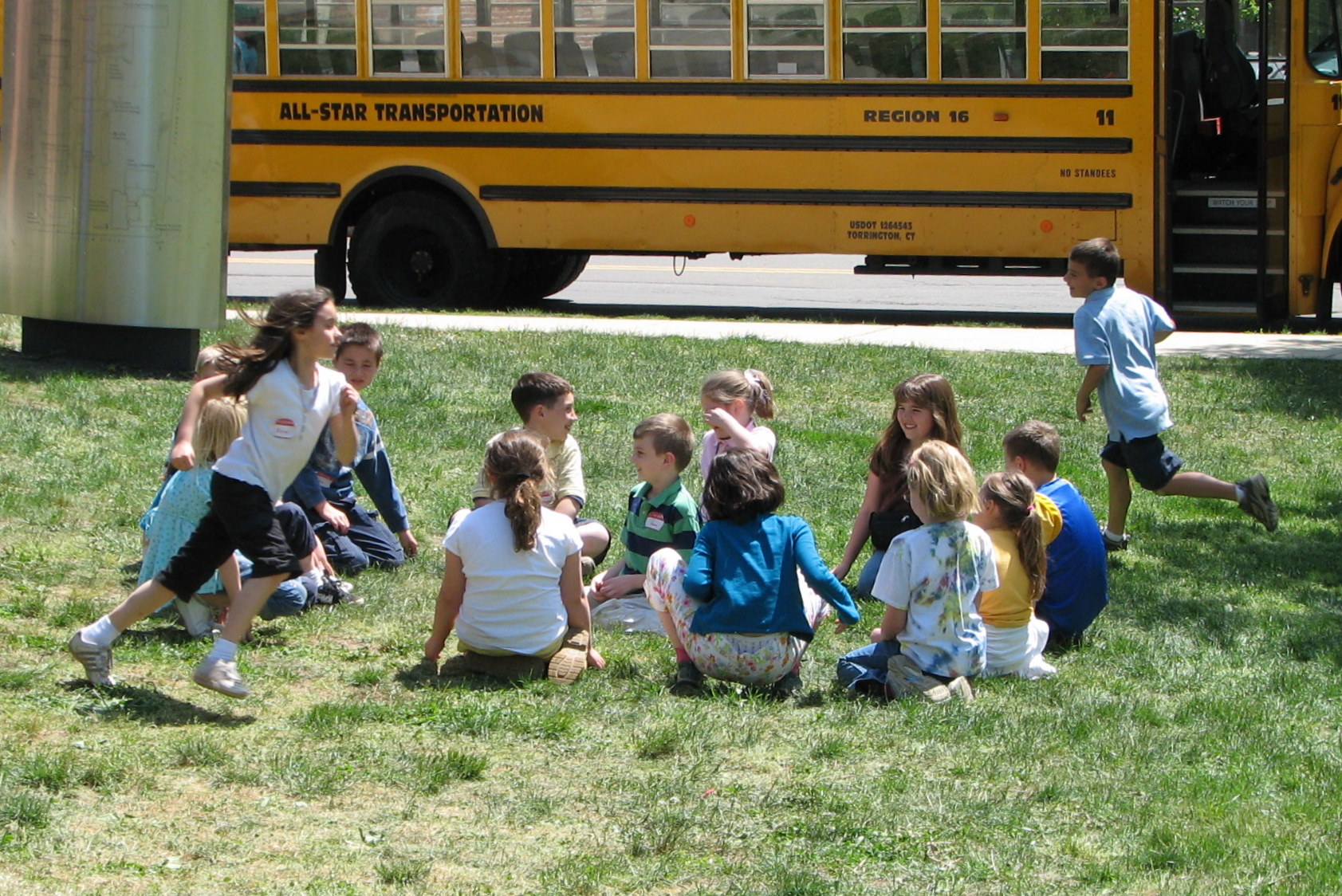
Children love to play games and those involving active play which allow them to move around or even run are perhaps the best loved of all. Duck, Duck, Goose is one of those very games. Simple to play, this non-competitive game requires no special equipment, skill or abilities and children as young as kindergarten can participate.

Duck, Duck Goose is best played outdoors on the grass or other soft impact surface. However, on rainy days when recess must be held indoors the game can be played in open areas such as a gymnasium. Before beginning, you will want to talk to your students about fair play and making sure that everyone is included in the game play and gets to have a turn. Because the game involves physical contact, you will also want to talk to them about the appropriate way to tap someone on the head or shoulder without actually hitting or hurting.

To play the game, one student is chosen as the goose while all remaining students are the ducks. The goose can be picked at random or a classroom leader such as the student of the week can begin the game as the first goose. Once the goose is chosen the ducks all sit in a circle facing each other. The goose then walks slowly around the outside of the circle lightly tapping each duck on the head or the shoulder while saying the word duck with each tap.

At some point in the game the goose will choose a new student to take its place as goose and then join the circle of ducks. The way this happens is that when the goose reaches the chosen successor in the circle, he or she taps them and says "goose!" and then takes off running. The duck gets up from his or her seat and chases the goose around the circle trying to tag them in return. The goose must reach the duck's vacated spot in the circle and take their seat before the duck can tag them. (The goose has to stay close to the circle while trying to avoid being tagged.)

                                                         
(Source: http://en.wikipedia.org/wiki/Duck,_duck,_goose#mediaviewer/File:Duckduckgoose.gif)

If the goose successfully reaches its destination the duck then becomes the new goose. If not, the goose must start over and try and get another duck to take its place outside the circle. Play continues in this manner until the time allotted for the game is up. It should be noted that this is not a game for groups that include children who are physically challenged and might have difficulty with walking or running.

Source: http://www.educationspace360.com/index.php/how-to-play-duck-duck-goose-14584/

Monday, December 15, 2014

Top 10 Benefits of Youth Sports


Friendly competition, opportunities for getting involved with your child, and the excitement of gamedays are all reasons why parents choose to enroll kids in sports; but engaging little ones in athletics has a bevy of other benefits! Take a look at some of the top ten benefits for involving your child in youth sports!
 
  1. Socialization skills: Learning to share is a skill children are introduced to very early on, but being socialized and "playing well" with others requires a lot more than that! Sports give children a way to practice a range of critical social skills including effective communication and conflict resolution; all while making new friends!
  2. New friends: Not for the kids this time...but for the parents! New to the area? Stay-at-home-mom? Busy professional?? Youth sports are beneficial to parents also because they provide parents an opportunity to meet other parents in the community, and those parents who share a similar interest of engaging their youngsters (an added benefit!)
  3. Community Awareness: Do you want to learn more about where you live? What better way than by participating in a youth athletic league! (YAL) parents can learn a great deal about their communities through increased knowledge of local parks and recreation offerings; volunteering, by attending league or local government meeting; and by associating with community members and parents from neigboring schools. 
  4. Parent/Child Involvement: Speaking of being involved in the community, sports also helps parents to be more engaged with their children--even if finding time can be a predicament sometimes! Parents can bond with their children by helping them with practice sessions, volunteering (of course!), attending games, or by engaging them in good 'ole baseball chat around the dinner table or during car rides. Sharing stories about your own involvement in sports as a kid, or recent news events about sports events or baseball can also be interesting. Consider attending a professional game with your child as a reward or special treat! Tip: Youth leagues occasionally offer tickets to professional games as a fundraiser. Check with your league.
  5. Energy Aversion: Too much energy and hyperactivity are some of the most common gripes of parents to young children; but children sometimes only need more options for applying their endless energy...or more challenging options. Sports are a great solution. The physical demands of training, practices and games, can return children home feeling accomplished, yet tuckered out and ready for a good nights rest! Physical fitness: With physical fitness programs being cut in many schools, the need for extracurricular sports activities is even more important. Kids get exercise benefits through sports without even realizing that it is exercise!
  6. Mental fitness: Sports are a natural outlet for stress. Tantrums, mood swings, and occasional irritability are all part of being a kid, but instead of throwing in the towel, try an athletic league! Sports also are a self-esteem enhancer. Children gain a sense of pride as family and friends cheer for them. Sports provide a sense of connectedness and community, which are critical to development and overall well-being.
  7. Mentoring: A great coach not only motivates a team, but also is a great role model. Be sure that when you are choosing a youth league, that you also take the time to choose your coach! Send your coach an email introducing yourself, attend any meet-and-greets offered, or...volunteer to be a coach! Who know how to be a great coach other than you? 
  8. Free time: Need to run a quick errand, get apples at the grocery? Practices can afford parents a little much-needed time occasionally. Parents can also find creative time-saving options such as car-pooling, or arranging pickups and drop-offs with other parents. 
  9. Academic performance: Sports equals discipline, and good discipline equals increased school performance. When children learn the essence of being rounded, its easier for them to apply the same principles in other areas such as work, school, and personal life.
  10. Discipline/Life Skills: Speaking of work, sports teach important leadership skills, provides cultural exposure, and helps kids to learn how to manage difficult situations or difficult people! Respect, listening, arriving on time, training on regular schedule, eating well (plenty of fruits and veggies) and staying focused from distraction; are rules of almost any game. Winning and losing also teach kids fundamentals of pride and humility.
Fun: But come on...Winning is fun--when it happens! And the overall experience of being on a youth athletic team is fun; so if you haven't already, go register for something!

Now those are some good reasons to take your kid to the ballpark!

Source: http://www.arlingtonlittleleague.org/Page.asp?n=109716&org=arlingtonlittleleague.org

Wednesday, December 10, 2014

Upton Youth Baseball is now taking registrations for the Spring season !!!


To my local followers… Upton Youth Baseball is now taking registrations for the Spring season
http://www.uptonmabaseball.org/Registration/Default.asp?org=uptonmabaseball.org


"Visualization" the Secret to 15 Olympic Gold Medals


Visualization is the Secret to 15 Olympic Gold Medals, According to Record-Setting Olympic Swimmer Michael Phelps, Who “Mentally Rehearses” the Perfect Swim Each Night Before He Goes to Sleep to Experience Feeling Victorious Before He Even Sets Foot in the Pool

Mental visualization is the secret to success for Olympic swimmer Michael Phelps, who today became the most decorated Olympian in history with 19 Olympic medals. A record-breaking 15 of Phelps’ 19 medals are gold medals.

Despite some media speculation that he wouldn't be able to remain focused enough to break the Olympic record, Phelps continues to demonstrate that he knows what it takes to continuously beat the fastest, strongest and most disciplined swimmers in the world. And according to Phelps, his success stems from first visualizing himself winning each race before he even steps foot in the pool.
In fact, Phelps claims he's been visualizing since he was seven years old, watching what he calls "his videotape" of the perfect swim in his mind each night before going to sleep to mentally map out his ideal swim for the next day.

“I like to think of myself as a normal person who has a passion, has a goal and a dream and goes out and does it,” Phelps told The Daily Telegraph. “Throughout my career, nobody has been able to stand in my way. I have gone through ups and downs. Nobody is going to put a limit on what I'm doing. I’m going to do what I want to do, when I want to do it. That is how I have always worked. If I want something I am going to go and get it."

Law of Attraction guru Natalie Ledwell said that many athletes attribute their success to what they call ‘sports visualization.’ Olympic figure skater Randy Gardner and basketball star Michael Jordan have also credited their success to visualization, defined by Wikipedia as “the practice of seeking to affect the outer world by changing one's thoughts and expectations.”

"When people learn how to use visualization, they gain the ability to mentally condition themselves for unstoppable success all kinds of life events and goals, just like Michael Phelps,” said Ledwell. “Yes, you can use this for sports, but visualization has also proven extremely effective for goals around losing weight, earning more money and much more.”

A celebrated speaker and author, Ledwell is also the co-founder of San Diego-based Mind Movies, a personal development company dedicated to helping others bring the full power of visualization and the Law of Attraction into their lives. Over 900,000 people worldwide have already received Ledwell’s free pre-made Mind Movies, which are dynamic, moving video vision boards that help users visualize and achieve their goals faster and easier than they ever thought possible.

To find out more about Mind Movies and download 6 free pre-made Mind Movies, visit: http://mindmoviestv.com

About Mind Movies:
Founded in 2008, Mind Movie's mission is to help empower people from all over the world to visualize their goals and manifest their greatest dreams and desires. Mind Movies has touched the lives of over 900,000 people around the world and is headquartered in downtown San Diego, California.

Company Contact Information:
Mind Movies
Media Relations
113 West G Street #122
San Diego, CA 92101
http://mindmoviestv.com

Source: http://www.prweb.com/releases/2012/8/prweb9762730.htm

Friday, November 21, 2014

The Truth about Agility Training for Baseball


Agility training for baseball is a very misunderstood concept. Most coaches and players think that by simply using an agility ladder or cone drills that an athlete will become more agile. Most coaches and players also think that by doing “agility” drills, athletes will increase linear speed, however both these arguments aren’t true.

The truth is that in a baseball game no player knows which direction they are going have to move in to track down a fly ball, field a ground ball or block a wild pitch. For this reason I don’t like predetermined ladder or agility drills because they have no carry over to the athletic field. My approach to agility training is very simple and old school. Great agility training for young kids is playing a game like tag. Sounds crazy but look at what is going on during this game. Kids are constantly dodging each other, moving in different directions. They are reacting to an unknown stimulus.

Realistically, baseball players should perform their agility training by reacting to a ball. Baseball players can improve their agility and range by doing player position drills. For a catcher there is nothing more dynamic then blocking balls in the dirt or fielding bunts. Middle infielders should work on their footwork on fielding ground balls and double plays.  Outfielders should work on improving their routes to fly balls. Working on these drills at 100% intensity will improve your agility and range.

Like everything in the performance world, the agility ladder has its place. For me, I would use it for my athletes as part of their warm up as a plyometic effect and to maybe get their nervous system going but no more than a couple of minutes. It is also great for young athletes because it will help improve their coordination. As far as cone drills go, unless you are getting tested specifically in the 3 cone drill or other drills of this nature, you are better off reacting to a ball or an unknown stimulus. Sure you will get good at ladder drills and cone drills if you perform them over and over again but let me ask you- how many sports can you name that have predetermined movement patterns?
1x1.trans The Truth about Agility Training for Baseball

In addition to actually playing baseball what can you do to improve agility?

The ability to control one’s bodyweight is critical to improving quickness. Like all other physical attributes such as speed, power and explosiveness, agility will increase once an athlete develops a certain level of relative body strength. Once a solid foundation of strength is built, an athlete will be able to handle his or her bodyweight better and thus be able to move in different directions quicker.

How about increasing speed?

The ability to increase the rate of force production will improve speed. In order to increase speed, you need to increase the rate of force production. I have found that there are three ways to increase rate of force production into the ground. The first way is through sprinting. If you want to run fast then sprint!  The second way is through building a strong lower body. This comes through using the max effort method, strengthening the posterior chain and through unilateral leg training. In addition to building strength, athletes need to train explosive strength, or dynamic strength. The most economical way of doing this is through jump training.

Improvements in an athlete’s vertical jump will lead to improvements in speed as well because of RATE OF FORCE DEVELOPMENT, NOT BECAUSE OF AN INCREASE IN “QUICK FEET” OR AGILITY.
1x1.trans The Truth about Agility Training for Baseball

Source: http://megliofitness.com/truth-agility-training-baseball/